
Elevator Wire Rope vs Belt: What Actually Differs
author: Cloe
2026-11-12
On any elevator belt vs rope comparison, this is the first thing to settle: an elevator wire rope is a part you can source from several manufacturers, priced by size and length, inspected with a torch and a rag. A coated steel belt is a part of a machine that was designed around it, priced by the set, and inspected with instruments most buildings do not own.
Rope wins on availability, on retrofit and on inspection you can do yourself. Belt wins on sheave diameter, and sheave diameter is what makes a machine room disappear.
How Each One Carries the Load
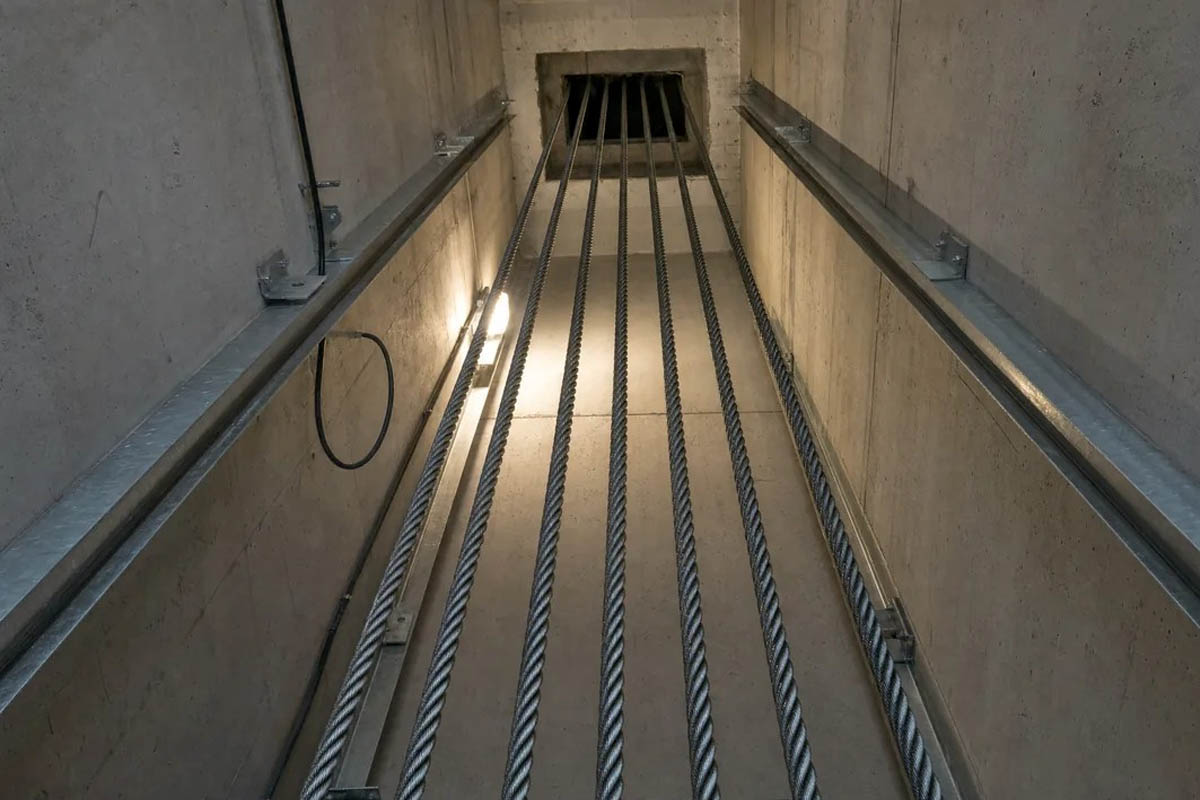
An elevator wire rope is a stranded construction: strands laid around a core, each strand made of smaller wires. An 8 mm rope of 6×19 construction holds 114 wires. Load is shared across them, and when one wire breaks you can see it.
The elevator wire rope specification is written the same way every time: diameter, construction, core, lay and minimum breaking force. Elevator wire rope construction matters as much as size, and 6×19 with a fibre core covers most lift duty. Several elevator rope types exist for special cases. Elevator rope size follows the rated load and the traction ratio, not what is in stock.
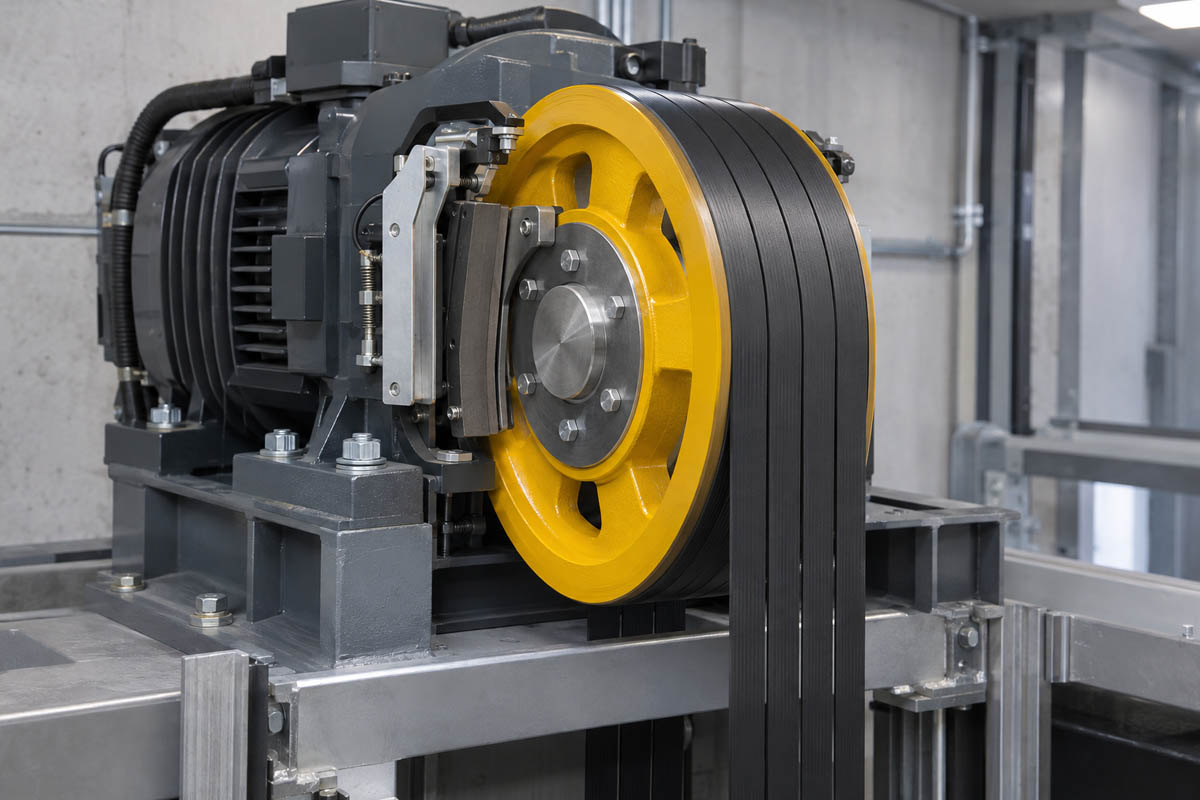
A coated steel belt is different in kind. Several small steel cords run parallel inside a flat polyurethane jacket, 30 mm wide and a few millimetres thick. The steel cord belt specification states the number and diameter of the cords, not just the belt width. In a polyurethane coated steel belt elevator the friction sits on the jacket, not on the steel, which is why it needs no lubricant and why the jacket is the part that wears.
That construction is the source of both advantages. A flat belt bends around a much smaller sheave than a round rope of the same strength. An elevator flat belt also weighs less per metre, which matters on tall shafts.
Why the Sheave Diameter Changes the Machine Room
This is the number that matters most, and it is rarely stated plainly.
A round rope needs a sheave at least forty times its diameter. Elevator wire rope diameter therefore sets the wheel: 8 mm needs a sheave of 320 mm or more. The machine has to be built around a wheel that size, and the wheel sets the size of the machine, the load on the shaft head and often whether a machine room is needed at all.
A coated steel belt runs on an 80 mm sheave. Four times smaller in diameter, and the machine that follows is 70 to 80 percent smaller in volume. This is why the flat-belt generation of lifts arrived together with the machine-room-less layout, and why the two are still sold as a package. A coated steel belt elevator is not a rope lift with a different rope; it is a different machine from the first drawing. A flat belt lift needs a machine built around it from the start, which is why the option rarely appears on a shaft that was designed for rope.
The elevator wire rope safety factor is fixed by standard rather than chosen: 12 where three ropes or more share the load, 16 where there are only two. Belt systems meet the same requirement through the cord specification instead of a rope count.
If your building has no space for a machine room, the belt is not a preference. It is the reason the lift fits.
What Kills Each One
Rope fails in ways you can see and count. Fatigue breaks individual wires, first at the points where the rope bends over the sheave. Diameter shrinks as the core settles. Lay length grows as the rope stretches. All three are measurable on site.
Published figures for elevator wire rope lifespan cluster between five and fifteen years, and lift wire rope life span depends more on sheave condition and alignment than on the rope itself. A worn sheave with sharp groove edges will cut rope life in half regardless of what was bought.
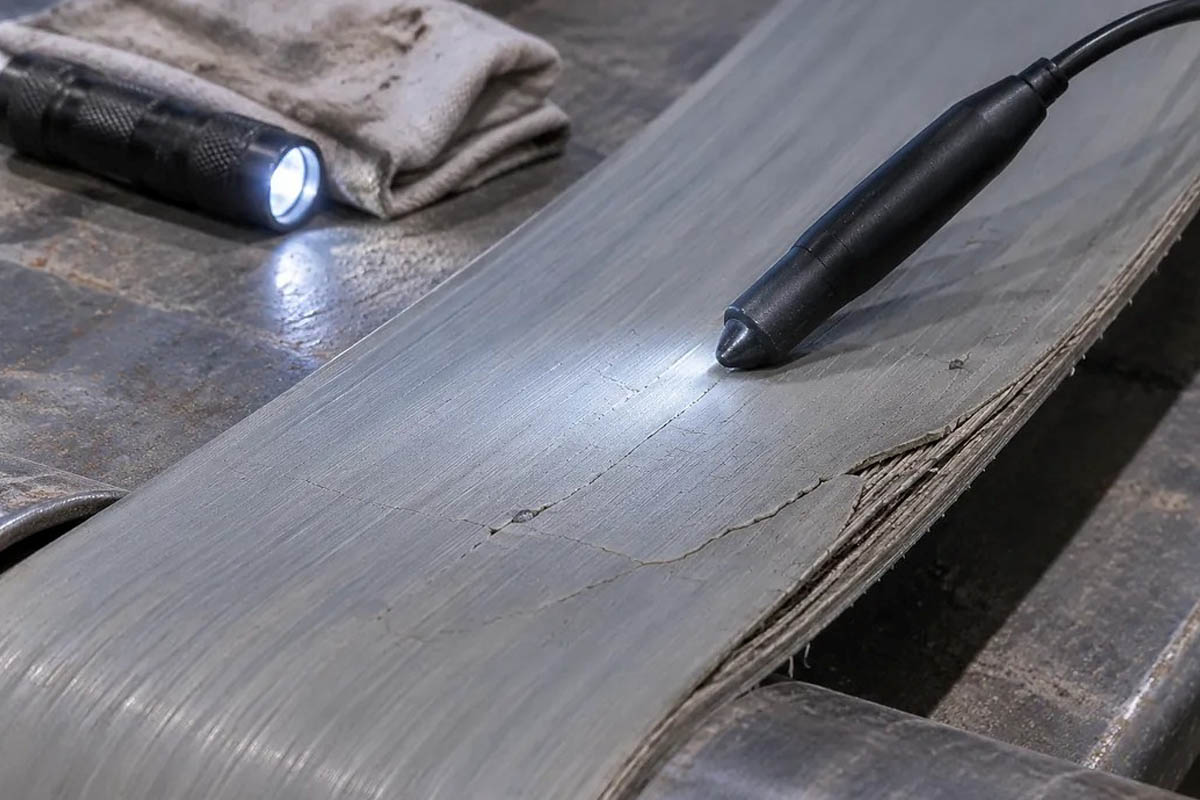
Belt fails in ways you mostly cannot see. The cords inside break where they bend, but the jacket hides them. What you can see is the jacket: cracks along the edge, separation from the cords, a flattened or shiny running face, grit embedded in the surface, or a colour change that suggests heat.
There is no equivalent of counting broken wires on a belt. That is not a criticism of the belt. It is a statement about what your maintenance organisation has to be able to do.
How You Find Out It Needs Replacing
For rope, the elevator wire rope replacement criteria are visual and numerical. Broken wires in a given length, loss of diameter against the original, and change in lay length against a baseline recorded at installation. An elevator wire rope inspection is something a competent person can do with basic tools, and the result is a number you can put in a report.
For belt, the criteria are condition-based and instrument-based. Jacket cracks, cord exposure, edge damage, and readings from a dedicated belt tester. An elevator wire rope tester does not help here; the instruments are not interchangeable.
The question to ask is not which method is better. It is whether the people maintaining your lift own the equipment and the training for the method their suspension means requires. A belt installation inspected with a rope checklist has no meaningful inspection at all.
What Maintenance Each One Needs
Elevator wire rope maintenance is mostly cleaning and light lubrication. The argument about the lubricant is old: it reduces wear between wires and protects against corrosion, but excess grease holds grit, hides broken wires and drips into the pit. The elevator wire rope lubricant matters less than the quantity applied. Most operators settle on a thin film applied regularly to clean rope.
Belt needs no lubricant at all, which removes a recurring task and a source of dirt. It does need cleaning, and it dislikes oil, grit and sharp edges. There is no elevator belt repair: a damaged jacket is a replacement, not a patch.
What a Replacement Involves
On elevator wire rope vs belt, replacement is where the two part company. Rope is a commodity. Elevator wire rope price is set by diameter and construction, and elevator wire rope price per meter is the number to compare rather than the price of a set. Several manufacturers supply it and lead time is usually days to a few weeks. The sheave is inspected and re-grooved if needed, not necessarily replaced.
The elevator wire rope replacement procedure is a day's work for a two-person crew on a low-rise lift. Elevator hoist rope replacement is planned work, not an emergency, provided the inspection has been honest. Most of the elevator rope replacement cost sits in labour and downtime rather than in the rope.
An elevator belt replacement is a different purchase. The belt is ordered to the machine it belongs to, often from the original supplier, priced per belt and rarely published. Lead time runs to weeks, and because belt and sheave wear together, a belt change is also the moment to measure the sheave. Elevator belt replacement cost is driven less by the material than by the fact that only one supplier can provide the part.
This is where retrofit decisions are made. Fitting a belt to a lift built for rope means changing the machine, the sheave and the traction geometry. It is a modernisation, not a rope change.
What Each Costs Over Fifteen Years
Purchase price is the smaller part of the difference.
Rope costs less to buy, more to maintain, and needs replacing more often. Belt costs more to buy, needs no lubricant, and is expected to last longer. Suppliers put the figure at twice to three times the life of rope, though published numbers vary and none of them come with a test method.
The costs that decide the total are the ones rarely compared: how many replacements fall inside fifteen years, what elevator belt price looks like when only one supplier can provide it, and how many days the lift stands still waiting for either.
Which One Fits Your Building
If you are weighing lift belt vs rope for a new shaft, start with the machine room question and the rest follows.
New build, no machine room. Belt. The 80 mm sheave is the reason the layout works.
New build with space for a machine room. Either. Rope is cheaper and easier to source locally; belt gives a smaller machine and no lubrication.
Older lift, traction machine in place. Rope. Changing to belt means replacing the machine, the sheave and the traction geometry, so the real comparison is between a rope change and a full modernisation, not between two components. Ask any supplier recommending the change what happens to the existing machine, and what the shaft head has to carry afterwards.
One exception is worth knowing. If the existing machine is already at the end of its life, the modernisation is happening anyway, and the belt becomes part of that decision rather than a separate one.
Tall building, many stops, high duty. Compare on replacement frequency and on who can supply the belt in your country. On a lift that runs constantly, downtime can exceed the parts cost.
What to Ask Before You Decide
Three questions, all free.
What is the sheave diameter, and what does that do to my shaft head and machine space?
What inspection method does this suspension means require, and do you have the equipment for it?
If this needs replacing in ten years, who supplies it and how long does delivery take?
The answers tell you more than any brochure, because they are specific to your building rather than to the technology.
The answer to elevator wire rope vs belt is therefore a question about your shaft rather than about which technology is newer.
Potensi supplies both configurations, and we will tell you which one your shaft suits — including the cases where the answer is the older, simpler option. Send the shaft dimensions and the existing machine details through our contact page and you will get that answer in writing.
POTENSI at Lift Expo Moscow 2026: Parts Matched at A5
Elevator Wire Rope: Construction, Sizing, Inspection and Replacement
Related Article

Three days at Crocus Expo, 10 to 12 November. By the third afternoon the stand had stopped feeling like an exhibition and started feeling like a workshop. Parts out of the box, labels read aloud, numbers written on cards.
POTENSI at Lift Expo Moscow 2026: Parts Matched at A5

An elevator wire rope is the only part of a lift that holds the car in the air. Everything else moves it, stops it, or tells it where to go.
This guide covers all four: construction, sizing, inspection, and replacement. It also covers the sheave, because an elevator wire rope and its groove wear each other out.
This guide covers all four: construction, sizing, inspection, and replacement. It also covers the sheave, because an elevator wire rope and its groove wear each other out.
Elevator Wire Rope: Construction, Sizing, Inspection and Replacement

An elevator works by using a motor, steel ropes, a counterweight, guide rails, and a control system to move a cabin safely between floors. In most modern buildings, the motor turns a traction sheave, the ropes move the cabin, and the counterweight helps reduce the load on the motor.
How Does an Elevator Work? A Simple Guide to Elevator Systems and Safety

If you are asking when the elevator was invented, the best answer depends on what kind of elevator you mean. Simple lifting platforms existed long before modern buildings, but the modern safety elevator was developed in the 1850s. Elisha Otis sold his first elevator with a safety brake in 1853, publicly demonstrated the device in 1854, and installed the first passenger safety elevator in New York City in 1857.
When Was the Elevator Invented? A Brief History of the Modern Elevator