
When Was the Elevator Invented? A Brief History of the Modern Elevator

This history matters because the elevator was not just a machine for moving people. It changed how buildings were designed, how cities grew, and how safe vertical transportation became possible.
When was the elevator invented?
The modern elevator was not invented in a single moment. Instead, it developed through several key steps.
Early lifting devices were used for moving materials long before passenger elevators became common. These early systems could raise heavy loads, but they were not safe enough for regular passenger use. The main danger was simple: if the hoisting rope broke, the platform could fall.
The turning point came in the 1850s, when Elisha Otis introduced the safety elevator. His safety brake could stop the platform from falling if the rope failed. This invention made elevators much more trustworthy and opened the door to passenger use in commercial buildings.
The key dates are:
- 1853: Elisha Otis sold his first elevator with a safety brake.
- 1854: Otis publicly demonstrated the safety brake at the Crystal Palace Exhibition in New York.
- 1857: Otis installed the first passenger safety elevator in New York City’s E.V. Haughwout Building.
So, if we are talking about the modern safety elevator, the elevator was effectively invented and commercialized during the 1850s.
Who invented the modern safety elevator?
Elisha Otis is widely associated with the invention of the modern safety elevator. However, it is more accurate to say that he did not invent the idea of lifting things vertically. People had used hoists, platforms, and lifting devices before him.
His real contribution was safety.
Before Otis, elevators were mainly used for freight. Workers accepted the risk because lifting goods by hand was slow and inefficient. But passengers would not trust a suspended platform if one broken rope could cause a fall.
Otis solved this problem with a safety brake. If the hoisting rope snapped, the brake would engage and stop the platform. This changed the elevator from a risky lifting device into a machine people could trust.
That is why Elisha Otis is so important in elevator history. He made vertical transportation safe enough for public use.
What happened during the famous 1854 elevator demonstration?
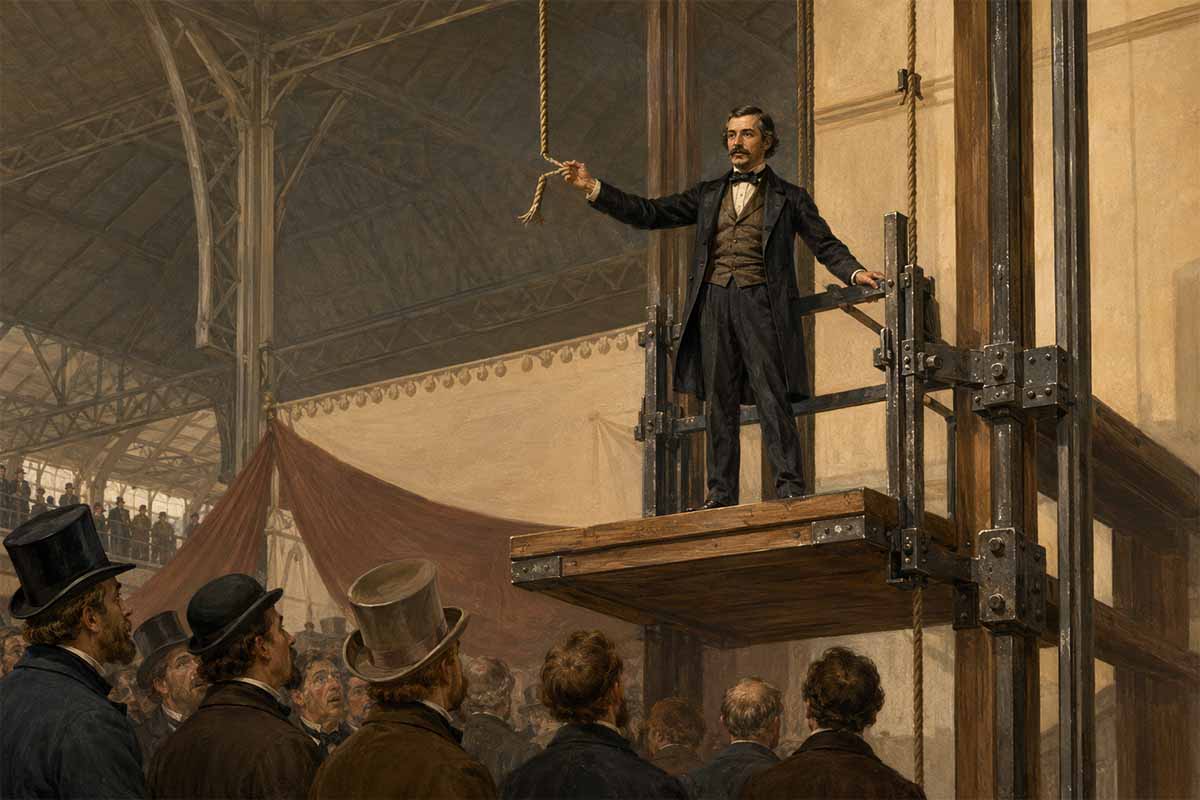
One of the most memorable moments in elevator history happened in 1854 at the Exhibition of the Industry of All Nations in New York, often called the Crystal Palace Exhibition.
Elisha Otis stood on a raised platform in front of a crowd. Then he ordered the supporting rope to be cut.
The audience expected the platform to fall. Instead, it dropped only a short distance before the safety brake stopped it. Otis then reportedly reassured the crowd with the famous words: “All safe, gentlemen, all safe.”
This demonstration was more than a show. It proved the value of the safety brake in a way people could immediately understand. Instead of explaining a technical drawing, Otis showed the result directly: even if the rope failed, the platform would not fall.
For buyers, builders, and the public, this changed the way elevators were viewed.
When was the first passenger elevator installed?
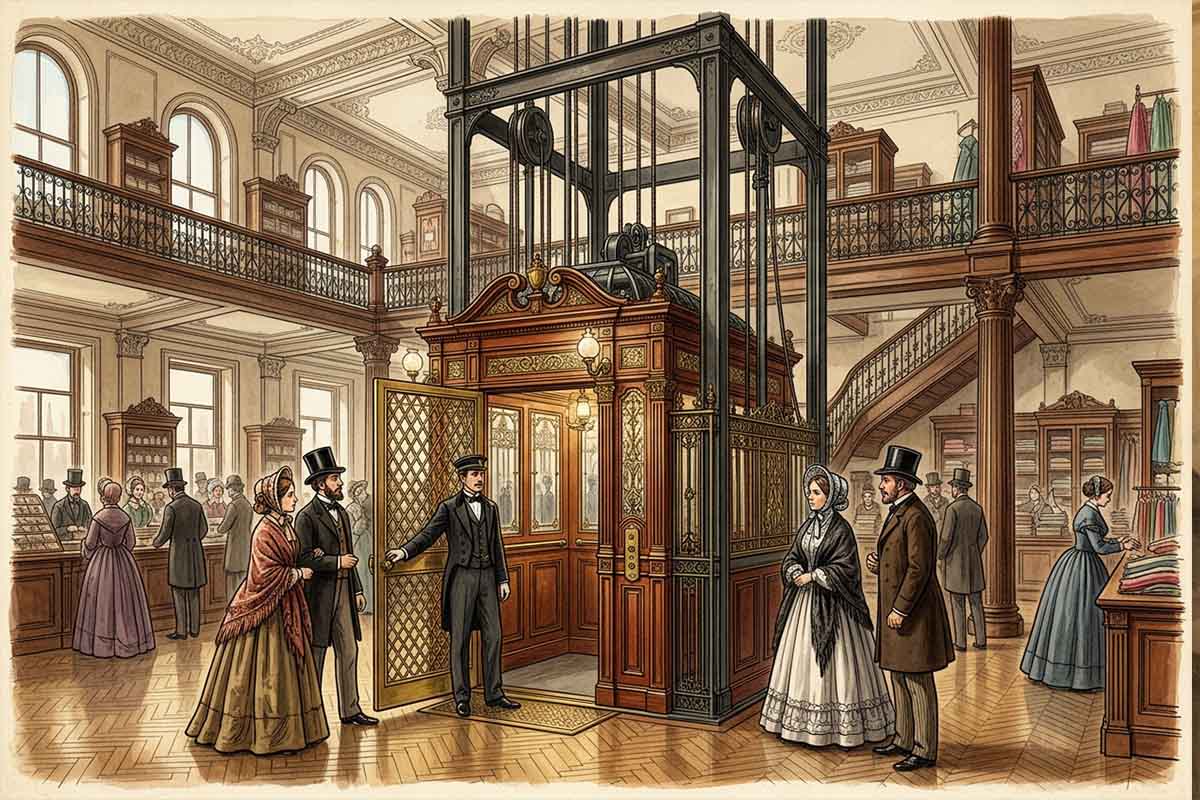
The first passenger safety elevator was installed in 1857 in the E.V. Haughwout Building in New York City. This building was a five-story department store, and the elevator helped customers move between floors more easily.
This installation was important because it moved the elevator from industrial use into commercial passenger service. It showed that elevators could be more than freight tools. They could become part of daily life in public buildings.
The first passenger elevator was slow by modern standards, but its impact was large. Once people accepted that elevators could be safe, architects and developers had more freedom to design taller and more valuable buildings.
Why was the safety elevator so important?
The safety elevator changed the future of buildings.
Before safe elevators, upper floors were less attractive. People had to climb stairs, so lower floors were usually more valuable. A tall building was not very useful if people could not move comfortably and safely between floors.
The safety elevator changed that logic. It made upper floors easier to access and helped turn vertical space into valuable space. This was one of the key reasons modern commercial buildings and later skyscrapers became practical.
The invention also changed public trust. People were more willing to ride an elevator when they knew a safety device could protect them in case of rope failure.
In simple terms, the safety elevator did not just move people upward. It allowed cities to grow upward.
How did elevators develop after the first safety elevator?
After the first safety elevator, elevator technology continued to evolve. Early systems used steam power, hydraulic systems, and different types of hoisting equipment. These designs helped move people and goods, but they still had limits in height, speed, and efficiency.
As building materials improved, especially with the use of steel structures, architects began designing taller buildings. Elevators had to become faster, smoother, and more reliable.
A major later development was the gearless traction machine. This technology allowed elevators to serve taller buildings more efficiently. It also helped support the rise of true skyscrapers in the early 20th century.
Over time, elevator systems added more advanced components, including automatic controls, stronger wire ropes, better guide rails, more reliable brakes, safer door systems, and improved emergency devices.
Modern elevators are the result of this long process. They are not just lifting platforms. They are complete vertical transportation systems.
Early elevators vs. modern elevators
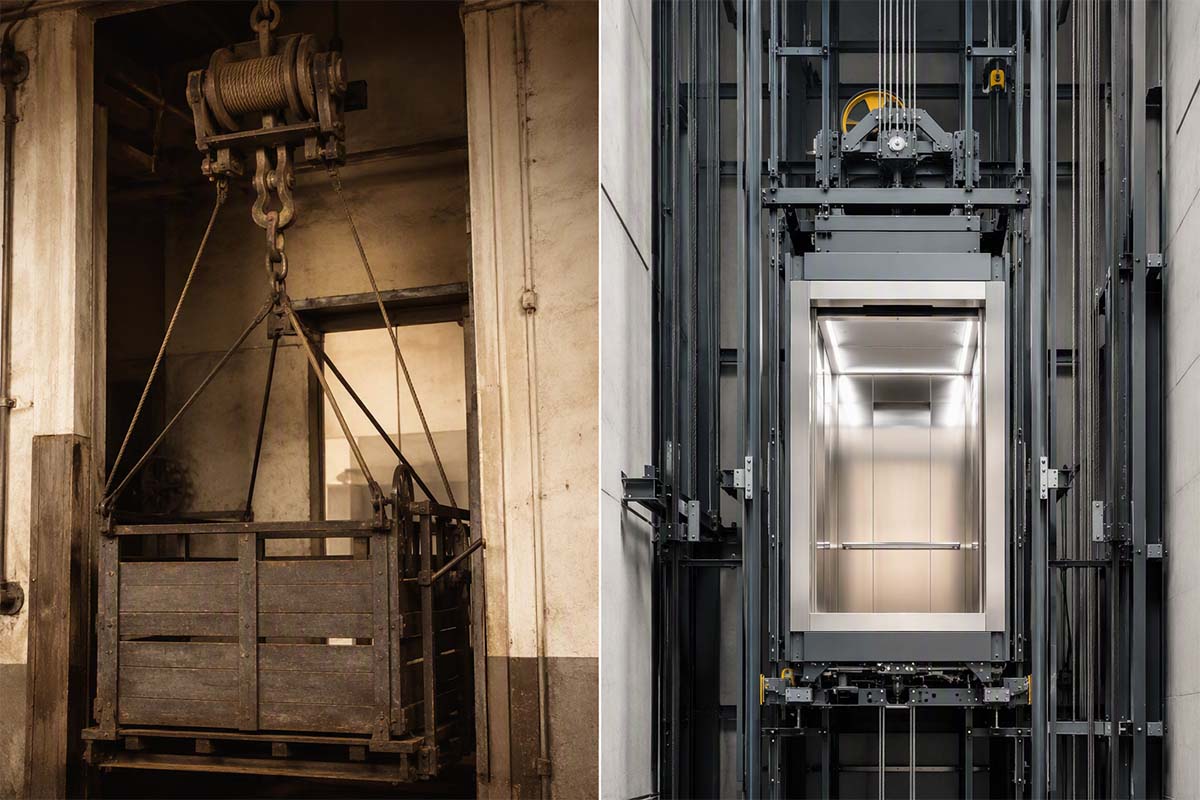
The difference between early elevators and modern elevators is significant. Early systems focused mainly on lifting. Modern systems focus on safety, comfort, efficiency, and precise control.
| Feature | Early elevators | Modern elevators |
|---|---|---|
| Main use | Freight movement and limited passenger use | Passenger, freight, residential, hospital, and commercial transportation |
| Safety | Basic or limited protection | Multiple safety systems and certified components |
| Drive system | Simple hoists, steam, or hydraulic systems | Traction, hydraulic, and machine room-less systems |
| Control | Manual or simple operation | Intelligent controllers and sensors |
| Door system | Basic gates or manual doors | Automatic doors, door locks, and light curtains |
| Key components | Platform, rope, hoist | Motor, wire ropes, guide rails, controller, doors, safety gear, buffers |
This comparison shows why modern elevator engineering is much more complex than early lifting technology. A modern elevator must not only move; it must move safely, smoothly, and repeatedly under daily use.
What parts make a modern elevator safe?
Modern elevator safety depends on more than one invention. It depends on the quality and coordination of many components.
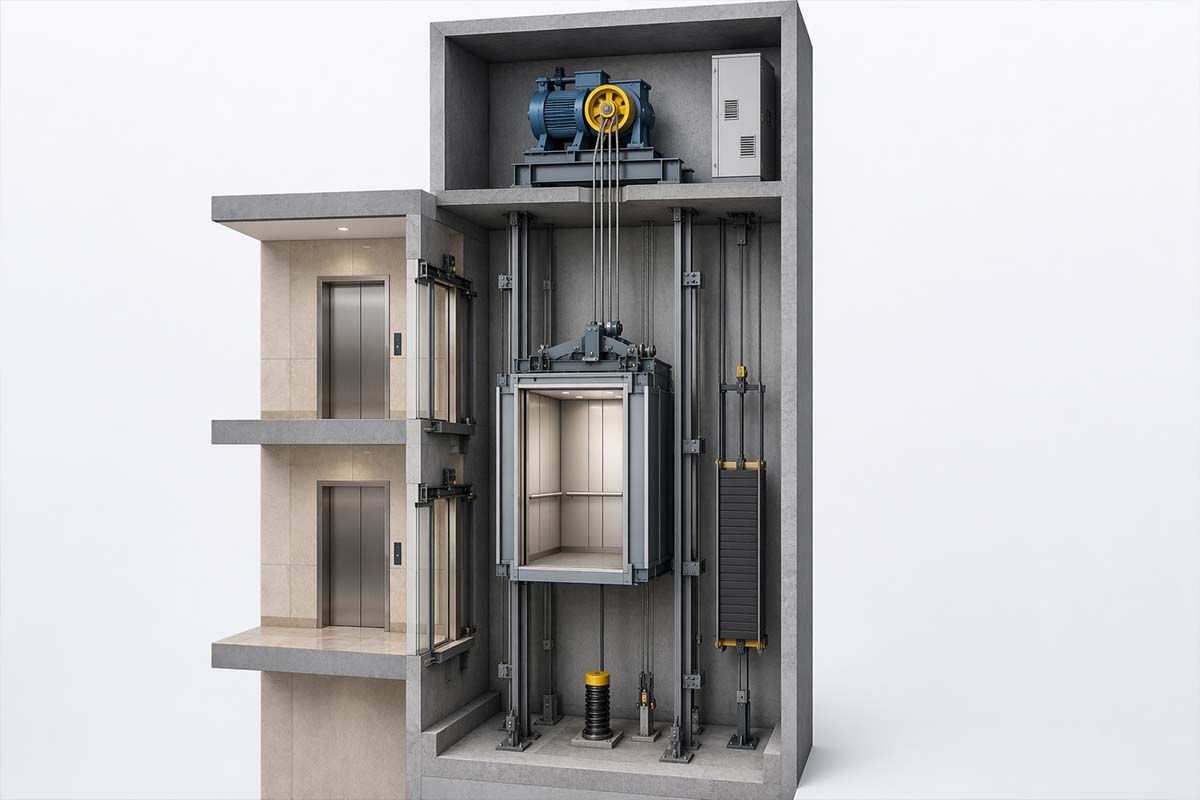
Key safety-related parts include:
- Elevator wire ropes: Carry and move the cabin in traction systems.
- Traction machine: Provides the driving force for movement.
- Guide rails: Keep the cabin moving in a straight vertical path.
- Controller: Manages speed, direction, floor signals, and safety circuits.
- Door operator and door locks: Prevent unsafe movement when doors are open.
- Overspeed governor: Detects abnormal speed.
- Safety gear: Grips the guide rails during overspeed conditions.
- Buffers: Provide final protection at the bottom of the shaft.
This is why component quality matters. A safe elevator requires certified parts, accurate installation, and regular maintenance. The history of the elevator began with a safety device, and modern elevator reliability still depends on safety-focused engineering.
Why elevator history still matters today
Elevator history is not just about the past. It explains why safety is still the center of elevator design.
The key lesson from Elisha Otis is simple: people trust elevators because they are designed to protect passengers when something goes wrong. That same principle still guides modern elevator manufacturing, installation, and maintenance.
Today, building owners and contractors must think beyond the visible cabin design. The real performance of an elevator depends on the hidden components inside the shaft and machine system. Wire ropes, guide rails, controllers, door systems, and safety devices all affect daily reliability.
For modernization projects, this history is especially relevant. Replacing aging components is not just about improving appearance. It is about restoring safe, efficient, and reliable vertical transportation.
FAQ about elevator invention
When was the elevator invented?
If you mean the modern safety elevator, the key period was the 1850s. Elisha Otis sold his first elevator with a safety brake in 1853, demonstrated the safety device in 1854, and installed the first passenger safety elevator in 1857.
Who invented the elevator?
Elisha Otis is usually credited with inventing the modern safety elevator. Earlier lifting devices existed before him, but Otis made elevators safe enough for regular passenger use.
Was Elisha Otis the first person to create a lifting device?
No. Lifting platforms and hoists existed before Elisha Otis. His major contribution was the safety brake, which prevented the platform from falling if the hoisting rope broke.
When was the first passenger elevator installed?
The first passenger safety elevator was installed in 1857 in New York City's E.V. Haughwout Building.
Why did the elevator change city buildings?
The elevator made upper floors easy to access. This helped buildings grow taller and made high-rise commercial buildings more practical.
How are modern elevators different from early elevators?
Modern elevators use advanced drive systems, controllers, door systems, guide rails, wire ropes, safety gear, and sensors. They are designed for safe, smooth, and repeated passenger transportation.
Conclusion
Understanding when the elevator was invented helps us see why modern vertical transportation depends on both invention and engineering quality. Early lifting devices existed before the 1850s, but Elisha Otis made elevators safe enough for passenger use with his safety brake.
From the first passenger safety elevator in 1857 to today’s advanced traction and machine room-less systems, elevator development has always been driven by safety, reliability, and better movement inside buildings. If you need certified elevator components or complete elevator solutions for a new installation or modernization project, contact our team for professional support and a competitive quote.
How Does an Elevator Work? A Simple Guide to Elevator Systems and Safety
Related Article


This guide covers all four: construction, sizing, inspection, and replacement. It also covers the sheave, because an elevator wire rope and its groove wear each other out.
